Finding affordable housing in big cities has become one of the biggest challenges for students, young professionals, families, and even middle-income earners. Major urban centers offer better job opportunities, modern lifestyles, entertainment, education, healthcare, and transportation systems, but they also come with rising rents, competitive housing markets, and limited availability.
Cities such as New York, London, Toronto, Dubai, Sydney, Karachi, and many others continue experiencing population growth, causing demand for housing to increase rapidly. As a result, many people struggle to find apartments or homes that fit their budgets while still meeting their lifestyle and commuting needs.
The good news is that affordable housing still exists in large cities if you know where and how to search. Finding a budget-friendly apartment requires strategy, patience, flexibility, negotiation skills, and proper planning. This guide explains practical methods to help you find affordable housing in big cities without sacrificing safety, convenience, or quality of life.
Why Housing in Big Cities Is Expensive
Urban housing prices continue increasing due to several factors.
High Demand
Large cities attract people seeking:
- Better careers
- Higher salaries
- Educational opportunities
- Modern lifestyles
As more people move into cities, housing demand rises significantly.
Limited Space
Big cities often have limited land for new housing developments, especially in downtown areas.
Population Growth
Urban populations continue growing rapidly worldwide, increasing competition for apartments and rental properties.
Desirable Amenities
People pay higher prices for neighborhoods with:
- Public transportation
- Restaurants
- Schools
- Offices
- Entertainment
Inflation and Construction Costs
Building materials, labor, and land prices have become more expensive in many countries.
Understanding Your Housing Budget
Before searching for apartments, determine how much you can realistically afford.
Follow the 30% Rule
Many financial experts recommend spending no more than 30% of monthly income on housing.
For example:
- If you earn $3,000 monthly
- Housing costs should ideally stay below $900
This helps maintain financial balance for:
- Food
- Transportation
- Savings
- Utilities
- Entertainment
Include Additional Costs
Many renters forget extra housing expenses such as:
- Electricity
- Water bills
- Internet
- Parking fees
- Security deposits
- Maintenance charges
Always calculate total monthly living costs.
Build an Emergency Cushion
Unexpected expenses may include:
- Rent increases
- Repairs
- Relocation costs
Having emergency savings reduces financial stress.
Decide What You Truly Need
Affordable housing often requires compromise.
Prioritize Essentials
Ask yourself which factors matter most:
- Safety
- Commute time
- Apartment size
- Public transportation
- Parking
- Furnished units
- Building amenities
Avoid Unnecessary Luxury Features
Luxury amenities often increase rent significantly.
Examples include:
- Rooftop pools
- Premium gyms
- Concierge services
- Smart home systems
Choose practical needs over status features when saving money matters.
Research Affordable Neighborhoods
Location strongly affects housing costs.
Avoid Expensive Downtown Areas
Central business districts are usually the most expensive.
Living slightly farther away often reduces rent dramatically.
Explore Emerging Neighborhoods
Up-and-coming neighborhoods may offer:
- Lower rent
- Better value
- Future growth potential
These areas often become more desirable over time.
Check Transportation Access
Affordable neighborhoods should still provide convenient transportation options.
Public transit access can reduce commuting expenses significantly.
Use Multiple Apartment Search Methods
Do not rely on only one platform or strategy.
Use Online Housing Platforms
Popular websites include:
- Zillow
- Apartments.com
- Realtor.com
- Craigslist
- OLX
- Facebook Marketplace
- Property Finder
- Zameen
Online platforms allow price comparisons and filtering options.
Join Social Media Housing Groups
Facebook groups and local online communities often list affordable rentals before they appear on major websites.
Ask Friends and Professional Networks
Many affordable apartments are rented through personal recommendations.
Networking increases opportunities to discover hidden deals.
Walk Around Neighborhoods
Some landlords still advertise using physical signs instead of online listings.
Walking through target neighborhoods may uncover cheaper options.
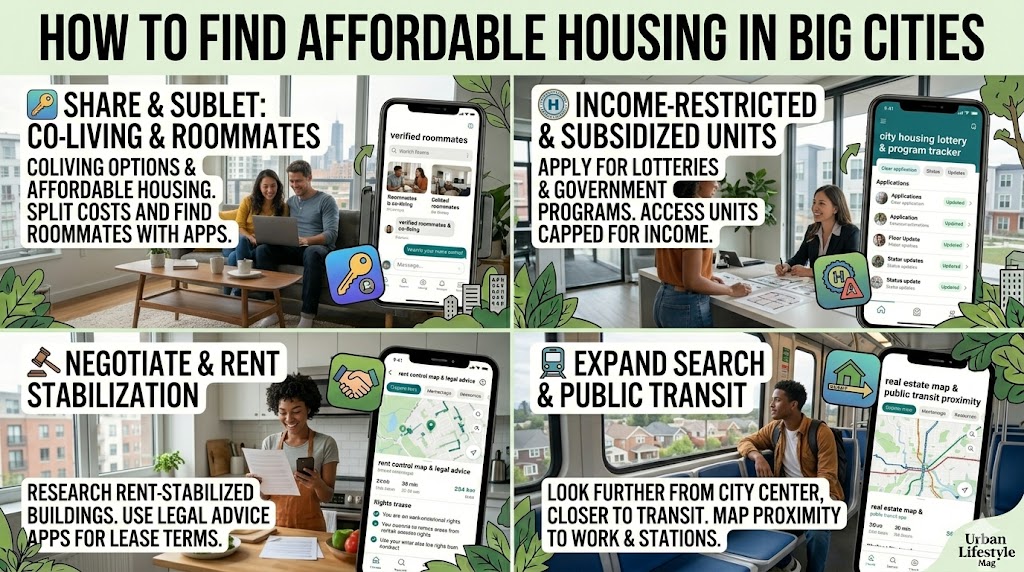
Consider Roommates
Sharing housing is one of the most effective ways to reduce urban living costs.
Benefits of Roommates
Roommates help reduce:
- Rent
- Utility bills
- Internet costs
- Furniture expenses
Choose Compatible Roommates Carefully
Living with incompatible roommates creates stress.
Discuss:
- Cleanliness
- Guests
- Noise levels
- Work schedules
- Financial responsibility
before moving in together.
Look for Smaller Apartments
Bigger apartments usually cost significantly more.
Studio Apartments
Studio apartments combine living and sleeping spaces into one room.
Benefits include:
- Lower rent
- Lower utility bills
- Easier cleaning
Micro Apartments
Many cities now offer compact apartments designed specifically for affordability.
Rent at the Right Time
Timing affects housing prices.
Search During Off-Peak Seasons
Rental markets are often more competitive during summer months.
Winter and off-season periods may provide:
- Lower prices
- Better negotiation opportunities
Start Early
Searching early gives you more choices and reduces rushed decisions.
Negotiate Rent
Many renters never attempt negotiation.
Ask Politely
Landlords may reduce prices if:
- Units stay vacant
- You sign longer leases
- You have strong references
Offer Long-Term Stability
Reliable tenants are valuable to landlords.
Stable employment and good rental history strengthen your negotiating position.
Be Flexible with Location
Flexibility expands affordable options.
Consider Nearby Suburbs
Suburban areas near cities often provide:
- Lower rent
- Larger spaces
- Better savings opportunities
Prioritize Transit Connectivity
A slightly longer commute may save substantial money monthly.
Avoid Rental Scams
Big cities attract many housing scams.
Warning Signs of Scams
Be cautious if:
- Rent seems unrealistically cheap
- Landlords refuse in-person viewings
- Payments are requested upfront immediately
- Communication feels suspicious
Never Send Money Without Verification
Always verify properties and landlords before transferring funds.
Understand Lease Agreements
Read lease agreements carefully before signing.
Check Important Details
Review:
- Rent terms
- Deposit policies
- Utility responsibilities
- Maintenance rules
- Pet policies
- Lease duration
Ask Questions
Clarify anything unclear before signing contracts.
Reduce Moving Costs
Relocation expenses add up quickly.
Move Yourself if Possible
Hiring movers can be expensive.
Buy Used Furniture
Secondhand furniture saves significant money.
Move During Weekdays
Weekend moving services are often more expensive.
Government Housing Assistance Programs
Some cities offer affordable housing support.
Public Housing Programs
Government programs may help lower-income individuals and families.
Rent Subsidies
Some countries provide rental assistance programs.
Affordable Housing Developments
Many cities now require developers to include affordable housing units.
Research local housing authorities for opportunities.
Co-Living Spaces
Co-living has become increasingly popular among young professionals.
What Is Co-Living?
Co-living combines:
- Private bedrooms
- Shared common spaces
- Community living
Benefits
Co-living often includes:
- Furnished apartments
- Utilities
- Internet
- Flexible leases
This option is especially attractive for newcomers to big cities.
Remote Work and Housing Flexibility
Remote work has changed urban housing trends.
Living Farther from City Centers
Remote workers often choose more affordable areas because daily commuting is less necessary.
Digital Nomad-Friendly Housing
Many cities now offer flexible furnished rentals for remote professionals.
Saving Money After Moving In
Affordable housing is only part of financial stability.
Reduce Utility Usage
Save money by:
- Using energy-efficient lighting
- Conserving water
- Limiting air conditioning use
Share Internet and Streaming Services
Roommates can split entertainment and internet costs.
Cook at Home
Restaurant spending often becomes a hidden financial burden in cities.
Furnishing an Apartment Affordably
Furniture costs can become overwhelming.
Buy Gradually
You do not need to furnish everything immediately.
Use Secondhand Marketplaces
Affordable options exist on:
- Facebook Marketplace
- Thrift stores
- Garage sales
- Craigslist
Focus on Essentials First
Start with:
- Bed
- Desk
- Seating
- Storage
Housing Trends in 2026
Urban housing continues evolving.
Smart Apartments
Technology integration is becoming more common.
Sustainable Buildings
Eco-friendly apartments with energy-efficient systems are increasing.
Flexible Leases
Younger renters increasingly prefer short-term and flexible contracts.
Shared Living Growth
Co-living and shared housing continue expanding in major cities.
Emotional Challenges of Urban Housing
Finding affordable housing can feel stressful and exhausting.
Housing Anxiety
Many renters worry about:
- Rising rent
- Lease renewals
- Competition
- Financial stability
Avoid Rushing Decisions
Desperation can lead to poor choices.
Take time to evaluate options carefully.
Tips for Students and Young Professionals
Young renters often face unique challenges.
Live Close to Transit
Public transportation access reduces commuting costs.
Network with Other Renters
Friends and colleagues may know affordable opportunities.
Stay Financially Disciplined
Avoid overspending on luxury apartments early in your career.
Long-Term Housing Strategies
Affordable housing should support future goals.
Save for Future Investments
Lower rent allows more savings for:
- Emergency funds
- Investments
- Home ownership
Improve Credit Scores
Good credit improves future housing opportunities.
Common Affordable Housing Mistakes
Choosing Apartments Beyond Budget
Expensive rent creates long-term financial pressure.
Ignoring Neighborhood Safety
Cheap housing should still provide safe living conditions.
Forgetting Commute Costs
Long commutes may increase transportation expenses significantly.
Not Reading Contracts Carefully
Lease misunderstandings can create serious financial problems.
Benefits of Finding Affordable Housing
Reduced Financial Stress
Lower housing costs improve peace of mind.
Better Savings Opportunities
Affordable rent allows more financial flexibility.
Improved Work-Life Balance
Reasonable housing costs reduce pressure to overwork.
Greater Lifestyle Freedom
Extra savings support travel, hobbies, education, and future investments.
The Future of Urban Housing
Cities worldwide are exploring new housing solutions.
Emerging trends include:
- Modular housing
- Smart apartments
- Co-living communities
- Sustainable urban development
- Affordable micro-units
Governments and developers increasingly recognize the importance of accessible housing for economic stability and urban growth.
Conclusion
Finding affordable housing in big cities may feel challenging, but it is absolutely possible with patience, research, flexibility, and strategic planning. The key is understanding your financial limits, prioritizing essential needs, exploring different neighborhoods, using multiple search methods, and staying disciplined throughout the process.
Affordable housing is not only about paying lower rent. It is about creating financial stability, reducing stress, and building a sustainable urban lifestyle. Whether you are a student, remote worker, young professional, or family relocating to a major city, smart housing decisions can improve both your quality of life and long-term financial future.
Big cities will likely continue growing and becoming more competitive, but informed renters who plan carefully can still find comfortable, practical, and affordable places to call home.
Frequently Asked Questions
How can I find cheap apartments in big cities?
You can find affordable apartments by researching multiple neighborhoods, using online housing platforms, considering roommates, and searching during off-peak seasons.
Is living with roommates worth it?
Yes. Roommates significantly reduce rent and utility expenses, especially in expensive cities.
What percentage of income should go toward rent?
Financial experts commonly recommend spending no more than 30% of monthly income on housing.
Are studio apartments cheaper?
Yes. Studio apartments are usually more affordable and have lower utility costs.
How can I avoid apartment scams?
Avoid sending money before verifying properties, meet landlords in person, and be cautious of unusually cheap listings.
Is it cheaper to live outside city centers?
In many cases, yes. Suburban or outer-city neighborhoods often provide lower rent prices.
What is co-living?
Co-living involves private bedrooms with shared living spaces and utilities, often designed for affordability and community living.
When is the best time to rent apartments?
Off-season periods such as winter months often provide better deals and less competition.
Should I negotiate rent?
Yes. Some landlords are willing to negotiate, especially for long-term tenants with stable income.
How can remote work help reduce housing costs?
Remote work allows people to live farther from expensive downtown areas while maintaining employment flexibility.