Urban living often comes with limited outdoor space, crowded environments, and busy lifestyles. Yet despite these challenges, more people are embracing urban gardening as a way to reconnect with nature, grow fresh food, reduce stress, and create peaceful living spaces. One of the easiest and most accessible forms of urban gardening is balcony gardening.
A balcony garden transforms even the smallest apartment balcony into a vibrant green oasis filled with plants, herbs, flowers, vegetables, and relaxing natural beauty. Whether you live in a compact city apartment or a high-rise building, balcony gardening allows you to enjoy many of the benefits of traditional gardening without needing a backyard.
In recent years, urban gardening has grown significantly due to rising interest in sustainability, healthy living, and eco-friendly lifestyles. According to urban agriculture experts, balcony gardens contribute positively to mental well-being, air quality, biodiversity, and local food production. (urbanagriculturemonth.org)
This complete guide explains everything you need to know about starting your own balcony garden, including planning, plant selection, containers, watering, sunlight, maintenance, design ideas, common mistakes, and long-term gardening success.
What Is Balcony Gardening?
Balcony gardening is the practice of growing plants on apartment balconies or small urban outdoor spaces. It allows city residents to cultivate flowers, herbs, vegetables, fruits, and decorative plants using pots, containers, vertical systems, and creative layouts.
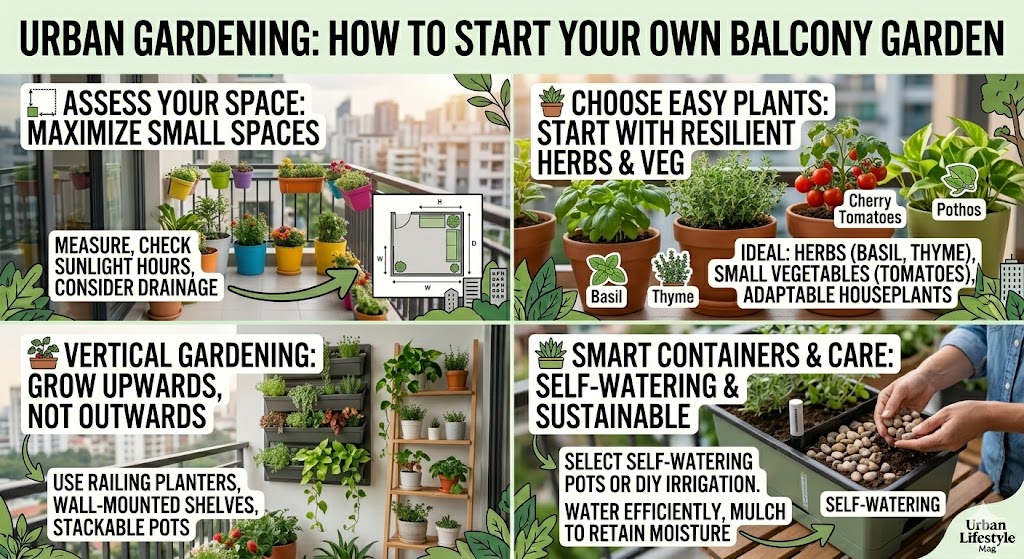
Balcony gardens can include:
- Flower gardens
- Herb gardens
- Vegetable gardens
- Succulent collections
- Hanging plants
- Vertical gardens
- Mini fruit gardens
- Indoor-outdoor green spaces
Balcony gardening is ideal for:
- Apartment residents
- Urban dwellers
- Beginners
- Eco-conscious homeowners
- People with limited outdoor space
Benefits of Balcony Gardening
Balcony gardening offers more than just visual beauty. It provides emotional, environmental, and health benefits.
Improves Mental Health
Gardening is widely associated with stress reduction and improved emotional well-being.
Spending time around plants can help:
- Reduce anxiety
- Improve mood
- Increase relaxation
- Enhance focus
- Support mindfulness
Many urban residents use balcony gardens as peaceful escapes from busy city environments.
Provides Fresh Herbs and Vegetables
Growing your own food allows access to fresh and organic produce.
Popular balcony-grown foods include:
- Mint
- Basil
- Tomatoes
- Chili peppers
- Lettuce
- Coriander
- Spinach
Fresh herbs also reduce grocery expenses over time.
Improves Air Quality
Plants naturally help filter pollutants and improve air quality in urban environments.
Enhances Apartment Aesthetics
A green balcony creates a stylish and inviting atmosphere.
Plants add:
- Color
- Texture
- Freshness
- Natural beauty
Supports Sustainability
Urban gardening supports eco-friendly living by:
- Reducing food transportation
- Encouraging composting
- Supporting biodiversity
- Lowering environmental impact
Encourages Physical Activity
Gardening involves movement and outdoor activity, which can support physical health.
Planning Your Balcony Garden
Successful balcony gardening starts with proper planning.
Assess Your Balcony Space
Before buying plants, evaluate your balcony carefully.
Consider:
- Balcony size
- Sunlight exposure
- Wind conditions
- Weight restrictions
- Drainage
- Privacy
Understanding your space helps determine which plants will grow successfully.
Measure Available Space
Measure your balcony dimensions to plan layouts efficiently.
Even small balconies can support multiple plants with vertical gardening techniques.
Understand Sunlight Conditions
Sunlight is one of the most important factors in gardening.
Balconies generally fall into these categories:
Full Sun
Receives 6–8 hours of sunlight daily.
Best for:
- Tomatoes
- Peppers
- Basil
- Lavender
Partial Sun
Receives 3–6 hours of sunlight.
Best for:
- Lettuce
- Spinach
- Herbs
Shade
Receives little direct sunlight.
Best for:
- Ferns
- Snake plants
- Peace lilies
Observe sunlight patterns throughout the day before selecting plants.
Check Wind Exposure
High-rise balconies may experience strong winds.
Wind can:
- Damage plants
- Dry soil quickly
- Break stems
Use wind protection such as:
- Screens
- Bamboo panels
- Trellises
Choosing the Right Plants
Plant selection determines the success of your balcony garden.
Best Plants for Beginners
Easy beginner-friendly plants include:
- Pothos
- Mint
- Basil
- Aloe vera
- Snake plants
- Spider plants
- Succulents
These plants require relatively low maintenance.
Best Herbs for Balcony Gardens
Herbs are ideal because they grow well in containers.
Popular herbs include:
- Basil
- Mint
- Coriander
- Parsley
- Thyme
- Oregano
- Rosemary
Fresh herbs are useful for cooking and smell wonderful.
Best Vegetables for Balcony Gardening
Many vegetables thrive in containers.
Examples include:
- Cherry tomatoes
- Chili peppers
- Lettuce
- Spinach
- Radishes
- Green onions
Compact vegetable varieties are best for small spaces.
Best Flowers for Balcony Gardens
Flowers improve balcony appearance and attract pollinators.
Popular balcony flowers include:
- Marigolds
- Petunias
- Geraniums
- Lavender
- Begonias
- Pansies
Low-Maintenance Plants
Busy urban lifestyles often require low-maintenance plants.
Good options include:
- ZZ plants
- Snake plants
- Cacti
- Succulents
Choosing Containers and Pots
Containers strongly affect plant health and balcony aesthetics.
Types of Containers
Common balcony containers include:
- Clay pots
- Plastic pots
- Ceramic planters
- Hanging baskets
- Wooden boxes
- Fabric grow bags
Ensure Proper Drainage
Containers must have drainage holes to prevent root rot.
Without proper drainage, excess water can damage plants.
Use Lightweight Containers
Heavy pots may stress balcony structures.
Plastic and fabric containers are often safer for apartment balconies.
Hanging Planters
Hanging planters save floor space and create visual interest.
They are ideal for:
- Trailing plants
- Herbs
- Flowers
Choosing the Right Soil
Healthy soil is essential for successful gardening.
Use Potting Mix Instead of Garden Soil
Regular garden soil often becomes compacted in containers.
Potting mix provides:
- Better drainage
- Improved aeration
- Healthier root systems
Add Compost
Compost improves soil nutrients naturally.
Benefits include:
- Better plant growth
- Moisture retention
- Sustainable gardening
Watering Your Balcony Garden
Proper watering is crucial for plant health.
Understand Plant Water Needs
Different plants require different watering schedules.
Factors affecting water needs include:
- Sun exposure
- Temperature
- Pot size
- Plant type
Avoid Overwatering
Overwatering is one of the most common gardening mistakes.
Signs include:
- Yellow leaves
- Mold growth
- Root rot
Water Early Morning or Evening
Watering during cooler hours reduces evaporation.
Use Self-Watering Pots
Self-watering containers help busy people maintain consistent moisture levels.
Fertilizing Balcony Plants
Plants in containers lose nutrients faster than garden plants.
Use Organic Fertilizers
Organic options include:
- Compost
- Worm castings
- Seaweed fertilizer
Fertilize Regularly
Most balcony plants benefit from monthly feeding during growing seasons.
Vertical Gardening for Small Balconies
Vertical gardening maximizes limited space.
Use Wall Planters
Wall-mounted planters save floor space while creating beautiful green walls.
Install Shelves
Plant shelves allow multiple layers of greenery.
Use Trellises
Trellises support climbing plants such as:
- Beans
- Cucumbers
- Vines
Hanging Gardens
Hanging systems create stylish and functional plant arrangements.
Balcony Garden Design Ideas
Balcony gardens can reflect different personal styles.
Minimalist Balcony Gardens
Focus on:
- Clean layouts
- Neutral pots
- Simple greenery
Tropical Balcony Gardens
Use lush plants such as:
- Palms
- Monsteras
- Ferns
Herb-Focused Gardens
Perfect for cooking enthusiasts.
Cozy Relaxation Gardens
Combine:
- Plants
- String lights
- Cushions
- Small seating areas
Bohemian Balcony Gardens
Include:
- Hanging plants
- Colorful pots
- Macrame decor
- Mixed textures
Seasonal Balcony Gardening
Plant care changes throughout the year.
Summer Gardening
Protect plants from:
- Extreme heat
- Dry soil
- Sunburn
Winter Gardening
Some plants need protection from:
- Frost
- Cold winds
- Heavy rain
Move sensitive plants indoors if necessary.
Pest Control for Balcony Gardens
Even balcony gardens can attract pests.
Common Balcony Garden Pests
Examples include:
- Aphids
- Spider mites
- Whiteflies
- Fungus gnats
Natural Pest Solutions
Eco-friendly methods include:
- Neem oil
- Soap sprays
- Companion planting
Avoid harsh chemical pesticides in small living spaces.
Composting in Small Apartments
Apartment residents can still compost successfully.
Indoor Compost Systems
Compact compost bins are suitable for balconies and kitchens.
Benefits of Composting
Composting reduces:
- Food waste
- Landfill contribution
It also creates nutrient-rich soil.
Balcony Gardening on a Budget
You do not need expensive supplies to start gardening.
Use Recycled Containers
Repurpose:
- Buckets
- Cans
- Bottles
- Wooden crates
Start Small
Begin with a few plants instead of overbuying.
Grow from Seeds
Seeds are often cheaper than mature plants.
Sustainable Balcony Gardening
Eco-friendly gardening practices support urban sustainability.
Collect Rainwater
Rainwater harvesting helps conserve water.
Avoid Plastic Waste
Use reusable gardening materials when possible.
Support Pollinators
Grow flowers that attract:
- Bees
- Butterflies
- Pollinating insects
Smart Technology for Balcony Gardens
Technology can simplify plant care.
Smart Watering Systems
Automatic watering systems help busy urban gardeners.
Gardening Apps
Popular apps help track:
- Watering schedules
- Plant identification
- Growth progress
Common Balcony Gardening Mistakes
Choosing the Wrong Plants
Plants must match your balcony conditions.
Overcrowding
Too many plants reduce airflow and create maintenance difficulties.
Ignoring Drainage
Poor drainage damages roots.
Using Cheap Soil
Low-quality soil limits plant health.
Forgetting Maintenance
Even low-maintenance gardens require attention.
Benefits of Balcony Gardening for Urban Living
Urban gardening positively affects city life.
Creates Connection with Nature
Plants help urban residents reconnect with natural environments.
Reduces Urban Heat
Plants help cool balconies and surrounding spaces.
Supports Mental Wellness
Green spaces improve emotional well-being significantly.
Builds Sustainable Habits
Gardening encourages eco-friendly living practices.
The Future of Urban Gardening
Urban gardening continues growing worldwide.
Emerging trends include:
- Smart gardens
- Hydroponics
- Vertical farming
- Community gardening
- Sustainable urban agriculture
Cities increasingly recognize urban gardening as important for sustainability and quality of life. (worldbank.org)
Simple Steps to Start Today
If you are new to balcony gardening, begin with these simple steps:
- Observe your sunlight
- Buy a few easy plants
- Use quality potting mix
- Choose proper containers
- Water consistently
- Start small
- Learn gradually
Gardening success develops over time through patience and experience.
Conclusion
Balcony gardening is one of the best ways for urban residents to bring nature into city living. Even the smallest balcony can become a relaxing green retreat filled with herbs, flowers, vegetables, and fresh air. Balcony gardens improve mental well-being, support sustainability, enhance apartment aesthetics, and provide a rewarding hobby for people of all experience levels.
Starting a balcony garden does not require a large budget or advanced gardening knowledge. With thoughtful planning, proper plant selection, and regular care, anyone can successfully grow plants in urban spaces.
Whether your goal is growing fresh herbs, creating a peaceful reading corner, supporting eco-friendly living, or simply adding beauty to your apartment, balcony gardening offers endless possibilities. As urban lifestyles continue evolving, balcony gardens are becoming increasingly important for healthier, greener, and more sustainable city living.
Frequently Asked Questions
What is balcony gardening?
Balcony gardening is the practice of growing plants on apartment balconies using pots, containers, vertical systems, and small-space gardening techniques.
Which plants grow best on balconies?
Popular balcony plants include herbs, succulents, tomatoes, peppers, marigolds, pothos, and snake plants.
Can vegetables grow on a balcony?
Yes. Many vegetables such as tomatoes, lettuce, spinach, radishes, and peppers grow well in containers.
How much sunlight does a balcony garden need?
Most vegetables and herbs need at least 4–6 hours of sunlight daily, though some plants thrive in partial shade.
What is the best soil for balcony gardening?
A high-quality potting mix with good drainage is best for container gardening.
How often should balcony plants be watered?
Watering depends on weather, sunlight, and plant type. Many balcony plants require watering once daily during hot weather.
Can I garden on a small balcony?
Yes. Vertical gardening, hanging planters, and compact containers help maximize small spaces.
Are balcony gardens expensive?
No. Balcony gardening can start with a small budget using recycled containers and affordable plants.
How do I prevent pests naturally?
Neem oil, soap sprays, healthy airflow, and proper watering help control pests naturally.
Is balcony gardening environmentally friendly?
Yes. Balcony gardening supports sustainability by improving air quality, reducing food transportation, and encouraging eco-friendly habits.