Living in a city offers countless opportunities, including better jobs, entertainment, public transportation, cultural diversity, and modern conveniences. However, urban living also comes with high expenses. Rent, transportation, dining, shopping, utilities, and entertainment can quickly consume your income if you are not careful with spending habits.
Many people assume that city living automatically means financial stress, but with smart planning and disciplined habits, it is completely possible to save money while enjoying urban life. Saving money in the city does not mean giving up all fun or comfort. Instead, it involves making intentional financial decisions, reducing unnecessary expenses, and taking advantage of the unique benefits cities provide.
This comprehensive guide explains practical strategies to help you save money while living in the city without sacrificing your lifestyle or happiness.
Why City Living Is Expensive
Urban environments often have higher costs because of:
- Expensive housing markets
- Transportation costs
- Dining and entertainment culture
- Higher utility bills
- Lifestyle pressure
- Convenience spending
- Limited living space
- Premium service pricing
Understanding where your money goes is the first step toward financial control.
Create a Realistic Budget
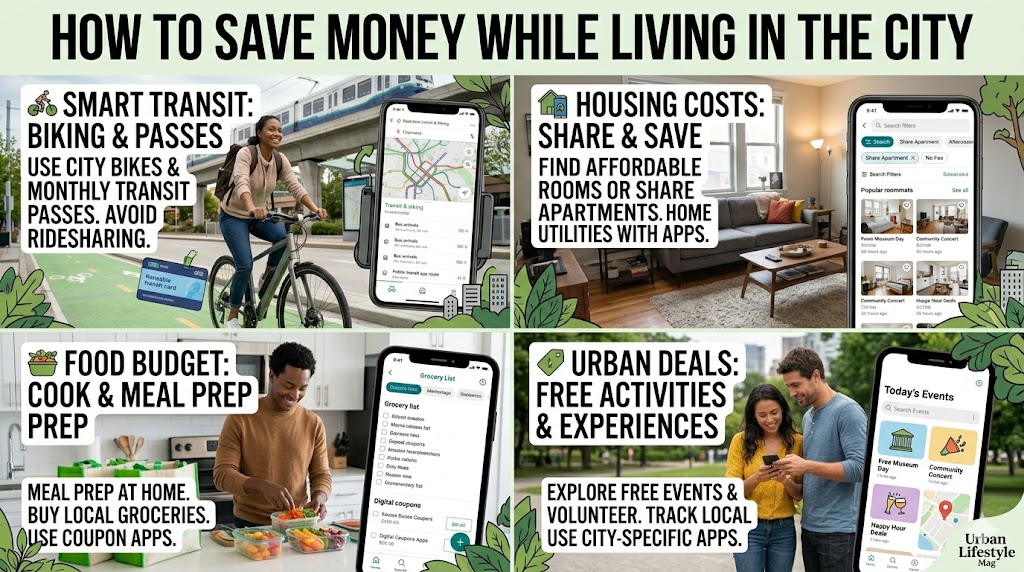
Budgeting is one of the most effective ways to save money in the city.
Track Your Expenses
Before cutting costs, understand your spending habits.
Track expenses such as:
- Rent
- Transportation
- Food
- Shopping
- Subscriptions
- Entertainment
- Utilities
Use budgeting apps or spreadsheets to monitor spending patterns.
Use the 50/30/20 Rule
A popular budgeting method divides income into:
- 50% for necessities
- 30% for personal wants
- 20% for savings and debt repayment
This system helps balance enjoyment and financial stability.
Set Monthly Savings Goals
Specific savings goals create motivation.
Examples include:
- Emergency fund
- Travel savings
- Apartment upgrades
- Investments
- Debt reduction
Save Money on Rent
Housing is usually the largest urban expense.
Get a Roommate
Sharing rent can significantly reduce monthly costs.
Benefits include:
- Lower rent
- Shared utility bills
- Shared internet costs
- Reduced household expenses
Choose Location Carefully
Living directly in expensive downtown areas often costs far more.
Consider neighborhoods that offer:
- Public transportation access
- Lower rent
- Nearby amenities
Sometimes living slightly outside the city center saves substantial money.
Negotiate Rent
Some landlords may negotiate prices, especially for:
- Long-term leases
- Early renewals
- Reliable tenants
Consider Smaller Apartments
Studio apartments and compact spaces are often more affordable and easier to maintain.
Reduce Transportation Costs
Transportation expenses add up quickly in cities.
Use Public Transportation
Public transit is often cheaper than owning a car.
Benefits include:
- Lower fuel costs
- No parking fees
- Reduced maintenance expenses
- Less insurance spending
Monthly transit passes can offer additional savings.
Walk or Cycle More
Walking and cycling help save money while improving health.
Short urban trips are often faster by bike or on foot than by car.
Avoid Ride-Sharing Overuse
Apps like Uber and Lyft are convenient but expensive when used daily.
Use them strategically instead of relying on them constantly.
Carpool When Possible
Sharing rides reduces fuel and parking costs.
Save Money on Food
Food spending can quietly drain your budget in the city.
Cook at Home More Often
Dining out regularly is one of the biggest urban financial traps.
Cooking at home helps:
- Reduce expenses
- Improve health
- Control ingredients
Meal preparation also saves time during busy weeks.
Plan Meals in Advance
Meal planning reduces:
- Impulse purchases
- Food waste
- Expensive takeout orders
Buy Groceries Strategically
Save money by:
- Buying store brands
- Shopping sales
- Using coupons
- Purchasing seasonal produce
Avoid Grocery Shopping While Hungry
Hungry shopping often leads to unnecessary purchases.
Bring Lunch to Work
Daily restaurant lunches become extremely expensive over time.
Homemade lunches can save thousands annually.
Use Food Delivery Apps Carefully
Delivery fees, taxes, and tips significantly increase meal costs.
Reserve food delivery for occasional convenience rather than routine use.
Cut Utility Bills
Urban apartments often come with high utility expenses.
Reduce Electricity Usage
Simple habits include:
- Turning off lights
- Unplugging electronics
- Using LED bulbs
- Using fans instead of excessive air conditioning
Conserve Water
Reduce water bills by:
- Taking shorter showers
- Fixing leaks
- Running full laundry loads
Share Internet Services
Roommates can split internet and streaming service costs.
Limit Subscription Spending
Subscription services quietly increase monthly expenses.
Audit Your Subscriptions
Review all active subscriptions including:
- Streaming platforms
- Music apps
- Fitness memberships
- Software services
Cancel anything you rarely use.
Share Family Plans
Family subscriptions often reduce costs for:
- Music streaming
- Video streaming
- Cloud storage
Shop Smarter
Impulse shopping is common in cities filled with malls and advertisements.
Follow the 24-Hour Rule
Before making non-essential purchases, wait 24 hours.
This reduces emotional spending.
Buy Secondhand
Thrift stores and online marketplaces offer affordable:
- Furniture
- Clothing
- Electronics
- Decor
Avoid Fast Fashion
Cheap clothing often leads to repeated purchases.
Invest in fewer, higher-quality items instead.
Compare Prices Online
Always compare prices before buying expensive products.
Save Money on Entertainment
Cities offer endless entertainment opportunities, but many are expensive.
Take Advantage of Free Events
Many cities offer:
- Free concerts
- Public festivals
- Outdoor movies
- Community events
- Museum free days
Explore Public Parks
Parks provide affordable recreation and relaxation.
Use Libraries
Modern libraries offer:
- Books
- Wi-Fi
- Study spaces
- Events
- Digital resources
Host Gatherings at Home
Home gatherings are often cheaper than restaurants or clubs.
Build an Emergency Fund
Unexpected urban expenses happen frequently.
Examples include:
- Medical bills
- Rent increases
- Job loss
- Transportation emergencies
An emergency fund provides financial security and reduces stress.
Start Small
Even saving a small amount monthly builds stability over time.
Avoid Lifestyle Inflation
As income increases, many people increase spending unnecessarily.
Live Below Your Means
Maintaining modest spending habits helps grow savings faster.
Focus on Long-Term Goals
Avoid spending simply to match others’ lifestyles.
Use Technology to Save Money
Apps can help manage finances effectively.
Budgeting Apps
Popular budgeting tools include:
- Mint
- YNAB
- PocketGuard
Cashback Apps
Cashback apps provide rewards for purchases.
Discount Platforms
Coupon and discount apps help reduce daily expenses.
Save Money While Working Remotely
Remote work can reduce urban expenses significantly.
Reduce Commuting Costs
Working from home lowers transportation spending.
Make Coffee at Home
Daily café visits become expensive quickly.
Create a Productive Home Workspace
A comfortable home office reduces the need for coworking spaces.
Save Money on Fitness
City gyms can be expensive.
Exercise Outdoors
Urban parks support:
- Running
- Walking
- Yoga
- Bodyweight workouts
Use Free Fitness Apps
Many apps offer affordable or free workout programs.
Choose Budget-Friendly Gyms
Avoid luxury gym memberships unless you truly use them consistently.
Practice Minimalism
Minimalism helps reduce unnecessary spending.
Buy Only What You Need
Avoid buying items for temporary trends or social pressure.
Declutter Regularly
Decluttering reveals how much unnecessary spending occurs over time.
Save on Furniture and Apartment Decor
Decorating urban apartments can become expensive.
Buy Gradually
You do not need to furnish everything immediately.
Use DIY Decor
DIY projects save money and personalize your space.
Shop During Sales
Furniture sales often happen during holidays and seasonal clearances.
Manage Debt Carefully
Debt can make city living financially overwhelming.
Pay High-Interest Debt Quickly
Credit card debt grows rapidly due to interest charges.
Avoid Buy-Now-Pay-Later Overuse
Small installment plans can create hidden financial burdens.
Develop Better Spending Habits
Financial discipline matters more than income alone.
Differentiate Needs from Wants
Ask yourself:
- Do I truly need this?
- Will I still value this later?
- Is there a cheaper alternative?
Avoid Emotional Spending
Stress and boredom often trigger unnecessary purchases.
Save Money Through Sustainable Living
Eco-friendly habits often reduce expenses too.
Use Reusable Products
Examples include:
- Water bottles
- Grocery bags
- Coffee cups
Reduce Waste
Waste reduction saves money on unnecessary purchases.
Buy Energy-Efficient Products
Efficient appliances lower utility costs over time.
Side Hustles and Extra Income
Increasing income also helps save more effectively.
Popular Urban Side Hustles
Examples include:
- Freelancing
- Tutoring
- Food delivery
- Content creation
- Graphic design
- Online selling
Monetize Skills
City environments often provide opportunities for networking and freelance work.
Social Pressure and City Spending
Urban lifestyles often create pressure to appear successful.
Avoid Comparison Culture
Social media can encourage unrealistic spending habits.
Focus on Financial Stability
True financial freedom matters more than luxury appearances.
Long-Term Financial Planning
Saving money is not only about cutting expenses.
Invest for the Future
Consider:
- Retirement savings
- Investments
- Emergency funds
Learn Financial Literacy
Understanding personal finance improves long-term stability.
Common Money-Saving Mistakes
Extreme Budgeting
Overly strict budgets often become unsustainable.
Ignoring Small Expenses
Small daily purchases add up significantly over time.
Failing to Plan
Lack of planning increases impulse spending.
Benefits of Saving Money in the City
Reduced Financial Stress
Savings provide peace of mind and security.
Greater Freedom
Financial stability creates more life choices.
Improved Mental Health
Money management reduces anxiety related to bills and debt.
Better Future Opportunities
Savings support future goals such as:
- Home ownership
- Travel
- Education
- Business investments
Building a Balanced Urban Lifestyle
Saving money should not eliminate joy from life.
The goal is balance:
- Spend intentionally
- Save consistently
- Enjoy experiences wisely
A healthy financial lifestyle supports both present happiness and future security.
Conclusion
Living in the city can be expensive, but smart financial habits make it entirely possible to save money while enjoying urban life. By budgeting carefully, reducing unnecessary expenses, cooking at home, using public transportation, avoiding impulse spending, and making intentional lifestyle choices, city residents can build strong financial stability over time.
Saving money is not about deprivation. It is about prioritizing what truly matters and making thoughtful decisions that support long-term goals. Small daily habits often create the biggest financial improvements.
Whether you are a student, young professional, remote worker, or family living in a city, consistent money-saving strategies can reduce stress, increase freedom, and help create a more secure future.
Frequently Asked Questions
How can I save money while living in an expensive city?
You can save money by budgeting carefully, reducing rent costs, cooking at home, using public transportation, and avoiding unnecessary spending.
What is the biggest expense in city living?
Housing is usually the largest urban expense, followed by transportation and food.
Is owning a car expensive in cities?
Yes. Fuel, parking, insurance, maintenance, and traffic costs make car ownership expensive in many cities.
How much money should I save monthly?
A common recommendation is saving at least 20% of your income when possible.
Are roommates a good way to save money?
Yes. Roommates help reduce rent and utility costs significantly.
How can I reduce food expenses in the city?
Meal planning, cooking at home, buying groceries strategically, and limiting takeout help reduce food spending.
Do budgeting apps actually help?
Yes. Budgeting apps improve spending awareness and financial organization.
Is city living always more expensive than suburban living?
Not always. Public transportation and smaller living spaces can sometimes offset certain urban costs.
How can I avoid impulse shopping?
Use waiting periods before purchases, create shopping lists, and avoid emotional spending triggers.
Why is financial planning important in urban living?
Urban environments often involve higher costs and lifestyle temptations, making financial planning essential for long-term stability.