Modern cities are full of opportunity, innovation, culture, and convenience. But they also come with serious environmental challenges such as pollution, excessive waste, traffic congestion, energy overconsumption, and shrinking green spaces. As urban populations continue to grow, sustainable living has become more important than ever. According to sustainability researchers and urban planning experts, cities produce a major share of global carbon emissions while consuming enormous amounts of energy and resources. (Coursera)
Creating a sustainable urban lifestyle does not mean giving up comfort or modern living. Instead, it means making smarter choices that reduce environmental impact while improving quality of life. Sustainable urban living focuses on efficient transportation, conscious consumption, energy conservation, waste reduction, healthier communities, and greener environments.
This guide explores practical and realistic ways to build a sustainable lifestyle in the city, whether you live in a small apartment, a busy downtown area, or a growing metropolitan neighborhood.
Understanding Sustainable Urban Living
A sustainable urban lifestyle is a way of living that minimizes harm to the environment while supporting social well-being and economic stability. It encourages individuals and communities to use resources responsibly and create healthier urban environments.
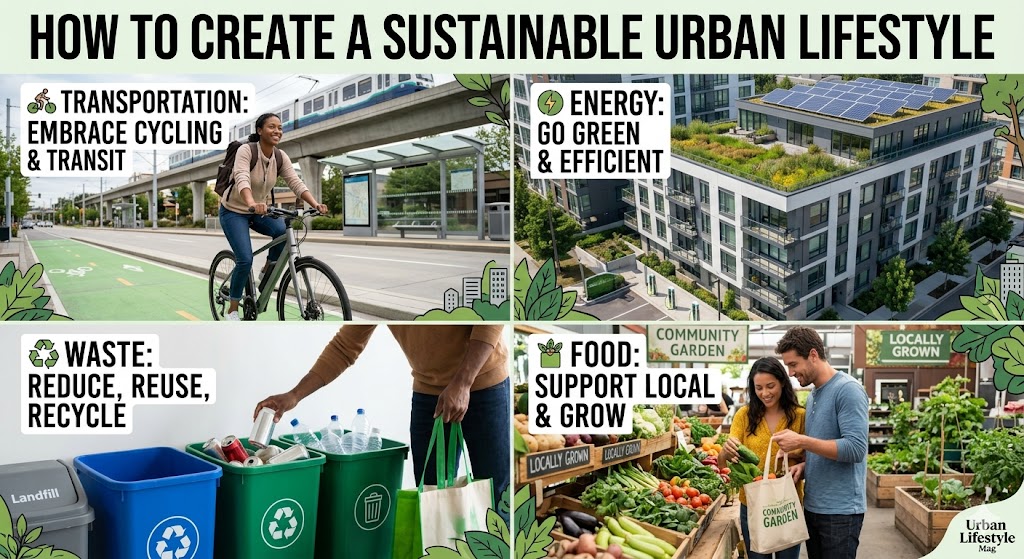
Sustainable cities often include:
- Walkable neighborhoods
- Efficient public transportation
- Renewable energy systems
- Green buildings
- Community gardens
- Recycling and waste reduction programs
- Energy-efficient infrastructure
- Eco-friendly transportation systems
Urban sustainability also focuses on improving mental and physical health through cleaner air, reduced stress, and stronger community connections. (Coursera)
Why Sustainable Urban Living Matters
Reduces Environmental Impact
Cities generate large amounts of greenhouse gas emissions due to transportation, construction, electricity use, and industrial activity. Sustainable practices help reduce pollution and conserve natural resources.
Improves Health
Walking, cycling, consuming healthier food, and spending time in green spaces can improve both physical and mental health.
Saves Money
Energy-efficient appliances, reduced consumption, and public transportation can lower monthly expenses.
Strengthens Communities
Sustainable living encourages local support systems, shared resources, and stronger neighborhood connections.
Prepares Cities for the Future
Climate change, rising temperatures, and population growth require cities to become more resilient and resource-efficient.
Choose Sustainable Transportation
Transportation is one of the biggest contributors to urban pollution. Sustainable mobility is one of the most effective ways to reduce your carbon footprint. According to environmental studies, public transit, cycling, and walking significantly reduce emissions compared to private vehicles. (Environmental Studies (EVS) Institute)
Walk More Often
Walking is the most sustainable form of transportation. It requires no fuel, creates zero emissions, and improves health.
Ways to walk more include:
- Choosing nearby grocery stores
- Walking to work when possible
- Taking evening walks instead of short car rides
- Exploring local neighborhoods on foot
The “15-minute city” concept encourages communities where essential services are accessible within a short walk or bike ride. (Reuters)
Use Public Transportation
Buses, metro systems, and trains reduce traffic congestion and emissions.
Benefits include:
- Lower fuel costs
- Reduced air pollution
- Less stress from driving
- Reduced parking expenses
Cities with strong public transportation systems are generally more sustainable and livable. (Environmental Studies (EVS) Institute)
Cycle Whenever Possible
Cycling is affordable, healthy, and eco-friendly.
You can start by:
- Using a bicycle for short trips
- Joining bike-sharing programs
- Investing in safety gear
- Exploring cycling-friendly routes
Many cities are now expanding bike lanes to support sustainable transportation systems.
Consider Electric Mobility
Electric scooters, e-bikes, and electric cars can reduce emissions compared to traditional fuel-powered vehicles.
However, sustainability also depends on:
- Electricity sources
- Battery production
- Responsible disposal systems
Create an Energy-Efficient Home
Urban apartments and homes consume large amounts of electricity. Making your home energy efficient is essential for sustainable living.
Reduce Electricity Consumption
Simple habits can make a big difference:
- Turn off lights when not in use
- Unplug unused electronics
- Use natural daylight
- Install LED lighting
- Use energy-efficient appliances
Green buildings can significantly reduce energy use and utility costs. (Coursera)
Improve Cooling and Heating Efficiency
Heating and cooling systems consume major amounts of energy.
To reduce usage:
- Use curtains to control indoor temperature
- Seal windows and doors properly
- Use ceiling fans
- Set thermostats responsibly
- Improve ventilation
Use Renewable Energy
If available in your city, consider:
- Solar panels
- Community solar programs
- Renewable electricity providers
Research shows that green roofs and solar roofs contribute positively to urban sustainability. (arXiv)
Practice Sustainable Consumption
Modern urban lifestyles often encourage excessive consumption. Sustainable living requires conscious purchasing decisions.
Buy Less but Better
Instead of buying cheap products frequently, choose durable and high-quality items.
Focus on:
- Long-lasting clothing
- Repairable electronics
- Reusable products
- Sustainable materials
Support Local Businesses
Buying local products helps:
- Reduce transportation emissions
- Strengthen local economies
- Support small businesses
- Encourage ethical production
Local farmers markets and neighborhood shops often have smaller environmental footprints.
Avoid Fast Fashion
Fast fashion contributes to pollution, waste, and unethical labor practices.
Instead:
- Buy fewer clothes
- Choose timeless styles
- Shop secondhand
- Donate unused items
- Repair damaged clothing
Reduce Single-Use Plastics
Urban areas generate massive plastic waste.
Reduce plastic usage by:
- Carrying reusable bags
- Using refillable bottles
- Avoiding plastic straws
- Choosing reusable containers
- Buying products with minimal packaging
Reduce Waste at Home
Waste management is one of the biggest sustainability challenges in cities.
Follow the 5Rs
Refuse
Avoid unnecessary products and packaging.
Reduce
Consume fewer resources.
Reuse
Use products multiple times.
Recycle
Separate recyclable materials correctly.
Rot
Compost organic waste.
Start Composting
Even apartment residents can compost using compact indoor compost systems.
Composting helps:
- Reduce landfill waste
- Improve soil quality
- Lower methane emissions
Recycle Properly
Many people recycle incorrectly.
Learn your city’s recycling guidelines for:
- Paper
- Plastic
- Glass
- Electronics
- Batteries
Minimize Food Waste
Food waste contributes heavily to methane emissions.
Ways to reduce food waste include:
- Meal planning
- Proper food storage
- Using leftovers creatively
- Buying only what you need
Adopt Sustainable Food Habits
Food choices greatly affect environmental sustainability.
Eat More Plant-Based Meals
Plant-based diets generally require fewer resources than meat-heavy diets.
You do not need to become fully vegetarian to make a difference. Even reducing meat consumption several days a week helps.
Buy Seasonal and Local Food
Seasonal food often requires:
- Less transportation
- Fewer preservatives
- Lower energy usage
Grow Small Urban Gardens
Urban gardening is becoming increasingly popular.
You can grow:
- Herbs
- Tomatoes
- Leafy greens
- Small vegetables
Balcony gardens and rooftop gardens improve air quality and reduce stress.
Conserve Water
Urban populations place immense pressure on water systems.
Reduce Daily Water Use
Simple habits include:
- Shorter showers
- Turning off taps while brushing
- Fixing leaks quickly
- Using efficient appliances
Use Water-Efficient Fixtures
Water-saving showerheads and faucets reduce consumption significantly.
Collect Rainwater
In some urban areas, rainwater collection systems can support gardening and cleaning.
Water conservation is considered a core component of sustainable cities. (Coursera)
Support Green Urban Spaces
Green spaces improve both environmental and human health.
Spend Time in Parks
Urban parks help:
- Reduce stress
- Improve air quality
- Support biodiversity
- Lower urban temperatures
Join Community Gardening Projects
Community gardens strengthen neighborhoods and encourage sustainable food systems.
Advocate for More Green Infrastructure
Green infrastructure includes:
- Trees
- Green roofs
- Urban forests
- Rain gardens
- Sustainable drainage systems
Researchers emphasize the importance of green infrastructure in sustainable urban planning. (Reddit)
Build Sustainable Daily Habits
Long-term sustainability depends on consistent habits.
Choose Digital Alternatives
Reduce paper waste by:
- Using digital bills
- Reading e-books
- Storing files digitally
Share Resources
Urban communities can reduce waste through shared systems such as:
- Car-sharing
- Tool libraries
- Shared workspaces
- Community exchange groups
Repair Instead of Replacing
Repairing electronics, furniture, and clothing extends product lifespan and reduces waste.
Embrace Minimalism
Minimalism complements sustainability by focusing on intentional living rather than excessive consumption.
Benefits include:
- Less clutter
- Reduced spending
- Lower waste generation
- Improved mental clarity
Make Your Workplace More Sustainable
Urban professionals spend much of their lives at work.
Reduce Office Waste
You can:
- Use reusable cups
- Print less
- Encourage recycling
- Use digital collaboration tools
Advocate for Sustainable Policies
Encourage employers to adopt:
- Remote work options
- Energy-efficient offices
- Sustainable sourcing
- Eco-friendly commuting incentives
Participate in Community Sustainability Efforts
Sustainability becomes more effective when communities work together.
Support Environmental Organizations
Join local sustainability initiatives focused on:
- Recycling
- Tree planting
- Clean-up campaigns
- Environmental education
Vote for Sustainable Urban Policies
Support policies promoting:
- Public transportation
- Green infrastructure
- Renewable energy
- Affordable housing
- Walkable neighborhoods
Educate Others
Sharing knowledge helps create larger social change.
Technology and Smart Urban Living
Technology can help improve urban sustainability when used responsibly.
Smart Home Devices
Energy-monitoring systems help reduce unnecessary electricity use.
Sustainable Apps
Apps can help with:
- Public transit navigation
- Carpooling
- Food sharing
- Waste reduction
- Energy tracking
Remote Work and Hybrid Living
Remote work reduces commuting emissions and traffic congestion.
However, digital sustainability also matters. Responsible use of technology and energy-efficient devices remain important.
Sustainable Urban Design and Architecture
Urban planning strongly affects sustainability outcomes.
Mixed-Use Development
Mixed-use neighborhoods combine housing, shopping, and offices in one area, reducing transportation needs. (Urban Align)
Green Buildings
Sustainable architecture often includes:
- Natural ventilation
- Solar energy systems
- Efficient insulation
- Recycled materials
- Water-saving systems
Rooftop Gardens and Green Roofs
Research shows green roofs improve urban sustainability by increasing green space and reducing environmental stress. (arXiv)
Challenges of Sustainable Urban Living
Despite the benefits, urban sustainability comes with challenges.
High Initial Costs
Some sustainable technologies require upfront investment.
Examples include:
- Solar systems
- Electric vehicles
- Energy-efficient appliances
However, long-term savings often offset initial expenses.
Limited Space
Urban residents may lack space for:
- Gardening
- Composting
- Renewable systems
Creative solutions such as balcony gardens and compact composting systems help overcome this issue.
Inadequate Infrastructure
Many cities still prioritize cars over pedestrians and cyclists.
Reddit discussions highlight transportation infrastructure as a major challenge for sustainable urban living. (Reddit)
Lack of Awareness
Many people want to live sustainably but do not know where to start.
Education and community support are essential.
Benefits of Sustainable Urban Living
Adopting sustainable habits offers significant long-term rewards.
Cleaner Environment
Reduced emissions improve air and water quality.
Better Health
Walking, cycling, healthy eating, and green spaces support physical and mental health.
Lower Expenses
Reduced energy use and conscious consumption save money.
Stronger Communities
Shared sustainability efforts improve social connection.
Greater Resilience
Sustainable cities are better prepared for climate change and resource shortages.
The Future of Sustainable Cities
Cities worldwide are increasingly embracing sustainability.
Emerging trends include:
- Smart city technology
- Electric public transport
- Renewable energy systems
- Carbon-neutral buildings
- Expanded cycling infrastructure
- Urban farming
- Zero-waste initiatives
Urban sustainability experts believe cities can dramatically reduce emissions through better planning and community participation. (Sustainability In Action)
Simple Steps to Start Today
If sustainable living feels overwhelming, begin with small actions.
Start by:
- Walking more often
- Using reusable bags
- Reducing electricity use
- Recycling properly
- Buying fewer unnecessary products
- Supporting local businesses
- Conserving water
- Eating more plant-based meals
Small daily changes create meaningful long-term impact.
Conclusion
Creating a sustainable urban lifestyle is not about perfection. It is about making thoughtful choices that support environmental responsibility, healthier communities, and better quality of life. As cities continue to grow, individuals have the power to influence urban sustainability through daily habits, transportation choices, consumption patterns, and community engagement.
Sustainable urban living benefits not only the planet but also personal well-being, financial stability, and social connection. Whether you start by reducing waste, using public transport, supporting local businesses, or conserving energy, every action contributes to a greener future.
The path toward sustainable cities depends on collective effort. Governments, businesses, communities, and individuals all play important roles in shaping healthier and more resilient urban environments for future generations.
Frequently Asked Questions
What is a sustainable urban lifestyle?
A sustainable urban lifestyle involves living in a city while minimizing environmental impact through responsible consumption, energy conservation, waste reduction, and sustainable transportation.
Why is sustainability important in cities?
Cities consume large amounts of energy and produce significant emissions. Sustainable practices help reduce pollution, conserve resources, and improve quality of life.
How can I live sustainably in a small apartment?
You can reduce energy use, recycle, compost, use reusable products, conserve water, and grow small balcony gardens even in limited spaces.
Is public transportation more sustainable than driving?
Yes. Public transportation generally produces fewer emissions per passenger compared to private vehicles.
How can I reduce waste in urban living?
Practice the 5Rs: refuse, reduce, reuse, recycle, and rot. Avoid single-use plastics and minimize unnecessary purchases.
What are green buildings?
Green buildings are designed to reduce environmental impact through energy efficiency, sustainable materials, and water conservation systems.
Can urban gardening really help sustainability?
Yes. Urban gardening improves food security, supports biodiversity, reduces transportation emissions, and enhances mental well-being.
What is a 15-minute city?
A 15-minute city is an urban design concept where essential services are accessible within a short walk or bike ride. (Reuters)
How does sustainable living save money?
Reducing energy use, minimizing waste, and using public transportation can lower monthly expenses significantly.
What are the biggest challenges to sustainable urban living?
Common challenges include high upfront costs, lack of infrastructure, limited space, and insufficient public awareness.