Introduction
Living in a small apartment has become increasingly common in modern cities around the world. Rising housing costs, urban lifestyles, and minimalist living trends have encouraged millions of people to embrace compact spaces. While a smaller apartment may seem limiting at first, it can actually become a comfortable, stylish, and highly functional home when organized properly.
Many people assume that small apartments automatically feel cramped, cluttered, or uncomfortable. However, smart design choices and practical habits can completely transform a limited space into a cozy and efficient environment. From choosing the right furniture to maximizing storage and improving lighting, small-space living can offer surprising advantages.
A small apartment often means lower rent, easier cleaning, reduced utility bills, and a more intentional lifestyle. Instead of focusing on how little space you have, the key is learning how to make every corner work effectively.
This comprehensive guide covers the best tips for living in a small apartment. Whether you are a student, working professional, newly married couple, or someone downsizing for simplicity, these strategies will help you create a home that feels bigger, brighter, and more organized.
Understanding the Challenges of Small Apartment Living
Before discussing solutions, it is important to understand the common problems people face in compact spaces.
Limited Storage
One of the biggest struggles is finding enough storage for clothes, kitchen items, books, electronics, and daily essentials.
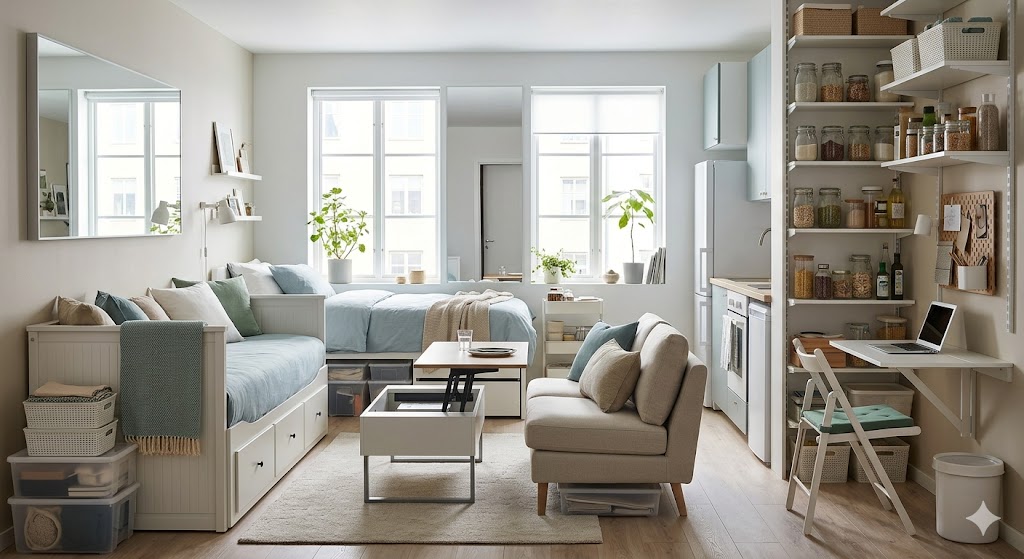
Clutter Accumulation
In a small apartment, even a few unnecessary items can quickly make the space feel messy and crowded.
Lack of Privacy
Studio apartments or shared spaces often provide little separation between sleeping, working, and relaxing areas.
Poor Lighting
Small apartments may have fewer windows, making the environment feel darker and smaller.
Multi-Purpose Spaces
One room may need to function as a bedroom, office, dining room, and living area simultaneously.
Fortunately, all these issues can be solved with thoughtful planning and smart organization.
1. Declutter Before Anything Else
The first and most important step in small apartment living is decluttering.
Why Decluttering Matters
Small spaces cannot accommodate unnecessary possessions. Holding onto unused items creates stress and wastes valuable room.
A clutter-free apartment feels:
- Larger
- Cleaner
- More peaceful
- Easier to maintain
How to Declutter Effectively
Follow the “Keep, Donate, Discard” Method
Separate items into categories:
- Keep only essentials
- Donate usable items
- Throw away broken or useless things
Be Honest About What You Use
If you have not used something in over a year, consider letting it go.
Digitize When Possible
Reduce physical clutter by:
- Scanning documents
- Using e-books
- Storing photos digitally
Avoid Emotional Hoarding
Keeping too many sentimental items can overwhelm small spaces. Preserve memories selectively.
2. Choose Multi-Functional Furniture
Furniture plays a major role in apartment functionality.
Benefits of Multi-Purpose Furniture
Smart furniture saves space while providing multiple uses.
Examples include:
- Sofa beds
- Foldable dining tables
- Storage ottomans
- Murphy beds
- Nesting tables
Best Furniture Ideas for Small Apartments
Sofa Beds
Perfect for studio apartments or guests.
Storage Beds
Beds with drawers underneath maximize hidden storage.
Foldable Tables
Can be expanded when needed and stored afterward.
Wall-Mounted Desks
Ideal for remote workers or students.
Stackable Chairs
Easy to store when not in use.
Investing in versatile furniture helps create a spacious feel without sacrificing comfort.
3. Maximize Vertical Space
Many people only use floor space while ignoring walls and ceilings.
Why Vertical Space Matters
Using vertical storage frees up the floor and makes the apartment appear larger.
Smart Vertical Storage Ideas
Floating Shelves
Great for:
- Books
- Plants
- Decorations
- Kitchen supplies
Tall Cabinets
Use full wall height instead of wide furniture.
Hanging Organizers
Useful in:
- Closets
- Bathrooms
- Kitchens
Wall Hooks
Perfect for:
- Bags
- Coats
- Keys
- Accessories
Over-the-Door Storage
An excellent hidden storage solution.
Vertical organization helps maximize every inch of the apartment.
4. Use Light Colors and Mirrors
Design choices greatly influence how spacious a home feels.
Best Colors for Small Apartments
Light shades reflect natural light and create openness.
Popular choices include:
- White
- Beige
- Light gray
- Soft pastel tones
How Mirrors Help
Mirrors visually double the space and improve brightness.
Best Mirror Placement
Place mirrors:
- Opposite windows
- Near light sources
- In narrow hallways
Large mirrors can dramatically change the appearance of a room.
5. Improve Lighting
Good lighting can make even tiny apartments feel open and welcoming.
Types of Lighting to Use
Natural Lighting
Keep windows uncovered whenever possible.
Use:
- Sheer curtains
- Light blinds
Layered Artificial Lighting
Combine:
- Ceiling lights
- Floor lamps
- Desk lamps
- Under-cabinet lighting
Warm Lighting
Warm tones create a cozy atmosphere without making spaces feel harsh.
Avoid overly dim or extremely bright lighting.
6. Create Defined Zones
Even in a studio apartment, defining areas improves organization and comfort.
Why Zones Matter
Separating activities mentally and visually makes the apartment feel more structured.
Examples of Functional Zones
Sleeping Area
Use rugs or curtains to separate the bed.
Work Area
Create a dedicated desk corner.
Dining Space
Use a compact table near the kitchen.
Relaxation Area
Arrange seating around entertainment or reading.
Defined zones help prevent the apartment from feeling chaotic.
7. Keep the Apartment Organized Daily
Organization is essential in small-space living.
Daily Habits That Make a Difference
Make the Bed Every Morning
Instantly improves appearance.
Wash Dishes Immediately
Dirty dishes quickly overwhelm small kitchens.
Put Items Back After Use
Avoid clutter buildup.
Follow the “One In, One Out” Rule
When buying something new, remove an old item.
Clean Regularly
Small apartments become messy faster than larger homes.
Consistency matters more than deep cleaning occasionally.
8. Utilize Hidden Storage
Hidden storage keeps the apartment neat and visually spacious.
Hidden Storage Ideas
Under-Bed Storage
Store:
- Seasonal clothes
- Shoes
- Extra bedding
Storage Ottomans
Useful for blankets, books, and accessories.
Hidden Kitchen Storage
Use:
- Drawer organizers
- Cabinet risers
- Magnetic knife strips
Furniture with Built-In Storage
Examples include:
- Benches
- Coffee tables
- Beds
Hidden storage reduces visible clutter.
9. Embrace Minimalism
Minimalism is especially useful in small apartments.
What Minimalism Really Means
Minimalism is not about owning nothing. It means keeping only items that serve a purpose or bring value.
Benefits of Minimalist Living
- Less stress
- Easier cleaning
- Better focus
- More space
- Reduced spending
How to Start Minimalism
Buy Intentionally
Avoid impulse purchases.
Focus on Quality Over Quantity
Fewer high-quality items are better than many unnecessary ones.
Avoid Decoration Overload
Simple decor creates elegance without crowding the space.
Minimalism helps small apartments feel calm and functional.
10. Optimize Closet Space
Closets can quickly become overcrowded.
Closet Organization Tips
Use Slim Hangers
They save significant space.
Add Shelf Dividers
Keeps stacks neat.
Store Seasonal Clothing Elsewhere
Rotate items based on weather.
Use Vacuum Storage Bags
Excellent for bulky winter clothing.
Install Additional Rods
Double hanging space efficiently.
An organized closet improves the entire apartment experience.
11. Smart Kitchen Organization
Small apartment kitchens require efficient planning.
Kitchen Space-Saving Tips
Use Vertical Cabinet Organizers
Increase storage capacity.
Hang Pots and Pans
Free cabinet space.
Store Frequently Used Items Accessibly
Improves convenience.
Use Compact Appliances
Avoid oversized equipment.
Keep Counters Clear
Makes the kitchen feel larger and cleaner.
Efficient kitchen organization simplifies cooking and cleaning.
12. Make the Bathroom Functional
Tiny bathrooms can still be stylish and practical.
Bathroom Storage Ideas
Use Over-Toilet Shelving
Adds valuable storage.
Install Hooks Instead of Large Towel Bars
Saves wall space.
Use Drawer Organizers
Keeps products manageable.
Limit Unnecessary Products
Avoid storing expired or rarely used items.
Add Mirrors
Enhances visual space.
A clean bathroom greatly improves apartment comfort.
13. Add Plants Carefully
Plants bring life and freshness into compact homes.
Best Plants for Small Apartments
- Snake plants
- Pothos
- Peace lilies
- Succulents
- Spider plants
Benefits of Indoor Plants
- Better air quality
- Improved mood
- Natural decoration
- Increased relaxation
Avoid overcrowding the apartment with too many plants.
14. Use Smart Technology
Technology can improve convenience while saving space.
Helpful Smart Devices
Smart Lighting
Control brightness and energy use.
Robot Vacuums
Ideal for maintaining cleanliness.
Wireless Chargers
Reduce cable clutter.
Smart Speakers
Provide entertainment without bulky systems.
Compact Smart Appliances
Save counter and storage space.
Technology can make apartment living simpler and more efficient.
15. Reduce Noise and Improve Privacy
Apartment living often involves shared walls and close neighbors.
Noise Reduction Tips
Use Rugs and Curtains
Absorb sound naturally.
Add Bookshelves
Help reduce noise transmission.
Use White Noise Machines
Improve sleep quality.
Communicate Respectfully with Neighbors
Good relationships matter.
Privacy improvements increase comfort significantly.
16. Decorate Without Overcrowding
Decoration should enhance the apartment, not overwhelm it.
Smart Decorating Tips
Choose Functional Decor
Examples:
- Decorative storage baskets
- Stylish shelves
- Attractive lighting
Use Fewer Large Pieces
Too many small decorations create clutter.
Stick to a Consistent Color Theme
Creates harmony and spaciousness.
Use Wall Art Strategically
Avoid overcrowding walls.
Balanced decoration creates elegance and warmth.
17. Maintain Good Airflow
Fresh air improves comfort and health.
Ways to Improve Airflow
- Open windows daily
- Use fans
- Avoid blocking vents
- Use air purifiers if necessary
Proper ventilation prevents stuffiness.
18. Create a Productive Home Office
Remote work has increased the need for functional workspaces.
Small Apartment Office Tips
Use Compact Furniture
Choose slim desks and ergonomic chairs.
Prioritize Lighting
Natural light improves productivity.
Keep Work Supplies Organized
Use drawers and organizers.
Separate Work from Relaxation
Even small boundaries help mentally.
A productive workspace improves focus and efficiency.
19. Budget Wisely for Apartment Improvements
You do not need expensive renovations to improve your apartment.
Affordable Improvement Ideas
- Peel-and-stick wallpaper
- LED lights
- Storage bins
- Floating shelves
- Compact furniture
- Removable hooks
Small investments can make a major difference.
20. Develop Healthy Living Habits
Small apartments function best when paired with healthy routines.
Helpful Lifestyle Habits
Avoid Overbuying
Only purchase what you truly need.
Clean Regularly
Prevents overwhelming messes.
Stay Organized
Daily habits maintain order.
Practice Mindful Consumption
Focus on intentional living.
A small apartment can support a peaceful and balanced lifestyle.
Advantages of Living in a Small Apartment
Despite the challenges, compact living offers many benefits.
Lower Costs
Smaller apartments often mean:
- Lower rent
- Reduced utility bills
- Lower maintenance costs
Easier Maintenance
Cleaning takes less time and effort.
Encourages Simplicity
Helps prioritize what truly matters.
More Eco-Friendly
Smaller spaces consume fewer resources.
Cozy Atmosphere
Compact homes often feel warm and inviting.
Common Mistakes to Avoid
Buying Oversized Furniture
Large furniture overwhelms small rooms.
Ignoring Vertical Storage
Wastes valuable space.
Keeping Too Many Items
Creates clutter and stress.
Poor Lighting Choices
Dark spaces feel smaller.
Lack of Organization
Even beautiful apartments fail without organization.
Avoiding these mistakes improves both functionality and comfort.
The Psychological Benefits of Organized Small Spaces
A well-organized apartment positively affects mental health.
Reduced Stress
Clutter often increases anxiety.
Improved Focus
Organized environments enhance concentration.
Better Sleep
Clean and peaceful surroundings promote relaxation.
Greater Satisfaction
A functional home increases happiness and confidence.
Your environment strongly impacts your emotional well-being.
Future Trends in Small Apartment Living
Urbanization continues increasing demand for compact living spaces.
Popular Trends
- Smart furniture
- Minimalist interiors
- Sustainable living
- Modular designs
- Multifunctional rooms
Modern innovation continues making small-space living easier and more stylish.
Conclusion
Living in a small apartment does not mean sacrificing comfort, beauty, or functionality. With thoughtful organization, smart furniture choices, and intentional habits, even the tiniest apartment can become an efficient and enjoyable home.
The secret to successful small-space living is maximizing every inch while minimizing unnecessary clutter. Simple adjustments such as using vertical storage, improving lighting, choosing multifunctional furniture, and embracing minimalism can dramatically transform the feel of your apartment.
A smaller home can actually encourage a more peaceful, organized, and financially balanced lifestyle. Instead of focusing on limitations, view your apartment as an opportunity to create a space that truly reflects your priorities and personality.
No matter the size of your apartment, the right strategies can help you live comfortably, stylishly, and happily.
Frequently Asked Questions (FAQs)
1. How can I make my small apartment look bigger?
Use light colors, mirrors, vertical storage, and minimal furniture. Keeping the apartment clutter-free also creates a more spacious appearance.
2. What furniture works best in small apartments?
Multi-functional furniture such as sofa beds, foldable tables, storage beds, and nesting tables works best for compact spaces.
3. How do I reduce clutter in a small apartment?
Declutter regularly, avoid impulse buying, use hidden storage, and follow the “one in, one out” rule.
4. Are small apartments cheaper to maintain?
Yes. Smaller apartments generally have lower rent, utility bills, and maintenance costs.
5. How can I organize a tiny kitchen?
Use vertical organizers, wall hooks, compact appliances, and drawer dividers while keeping countertops clear.
6. Is minimalism necessary for small apartment living?
While not mandatory, minimalism greatly helps by reducing clutter and improving functionality.
7. How can I create privacy in a studio apartment?
Use curtains, bookshelves, rugs, or room dividers to separate living areas visually.
8. What colors are best for small apartments?
Light shades such as white, beige, soft gray, and pastel colors help make spaces feel larger and brighter.
9. How do I maximize storage in a small bedroom?
Use under-bed storage, wall shelves, closet organizers, and furniture with hidden compartments.
10. Can plants work in small apartments?
Yes. Small indoor plants improve air quality and aesthetics without taking much space.
11. How often should I declutter a small apartment?
It is best to declutter seasonally and maintain daily organization habits.
12. Are small apartments suitable for remote work?
Yes, with proper organization and a dedicated workspace, small apartments can support productive remote work environments.
13. How can I improve lighting in a small apartment?
Maximize natural light, use layered lighting, and place mirrors strategically to reflect brightness.
14. What is the biggest mistake people make in small apartments?
Keeping too many unnecessary items and buying oversized furniture are the most common mistakes.
15. Is living in a small apartment stressful?
It can be stressful if poorly organized, but a clean and functional small apartment can actually feel peaceful and relaxing.